|
13 April 2026 TDL Update: April 2026
Patient Reception Sunday Opening Times
Sunday opening times from 8am to 11am at Patient Reception, 76 Wimpole Street, W1G 9RT. Monday to Friday 7am to 7pm | Saturday 7am to 1pm | Sunday 8am to 11am All times are for a Walk In Service – no appointment is required. Children under 14 years are always welcome to attend weekdays and Saturdays – but a child’s phlebotomy service is not available on Sundays. If you have any queries, or would like to know more about Sunday morning services, please contact: Randa Bonis, TDL Operations Manager, London
Child Safeguarding: Paediatric Attendance To fulfil safety, care and legal responsibility, a parent, legal guardian or recognised carer needs to be physically present for the duration of a child’s attendance. Samples cannot be taken from a child under the age of 18 years if this requirement is not met. Doctors and healthcare workers need to communicate this clearly with the parents, carers or guardians of children intending to attend for samples to be taken, before attending Patient Reception at 76 Wimpole Street. Please make a note on the request form to confirm that an appropriate adult will be present with the child throughout the time of their appointment.
If further clarification about the safeguarding of children is needed, please contact: Randa Bonis, TDL Operations Manager, London
Homocysteine (HOMO) Instruction update for sample collection for Homocysteine (HOMO) Homocysteine is an assay that measures the level of homocysteine in serum or plasma. The challenge that any laboratory has with samples for homocysteine is that the blood sample needs rapid special handling to avoid inaccurate reporting. The sample type for Homocysteine is either SST or EDTA. Samples need to be centrifuged and separated within one hour of collection or received in the laboratory within six hours if kept on wet ice. Once the sample has been spun and separated, it is stable for up to 3 days at ambient temperatures. The request form accompanying unspun samples should always clearly state the sample date and the time the sample was taken. Samples received over one hour, without date and time details given on the request form, need to be rejected.
Important change for reporting Total PSA results (PSPA) There has been a change to reporting of results for Total Prostate Specific Antigen (PSPA). This change does not affect the reporting of FREE PSA. The change in reporting shows reference ranges that harmonise with the patient referral thresholds, as recommended by the National Institute for Health and Care Excellence (NICE). The changes in reporting are as follows: From
To
If you require any further clarification, please do not hesitate to contact us. Dayan Lloyd-Hennie, Automated Systems Service Lead
Important change for QFIT results that are >10 ug/g and <80 ug/g In appropriate clinical scenarios, NICE (2023, DG56) defines a faecal haemoglobin level as >/= 10 ug/g as suspicious for colorectal cancer, requiring further assessment. Referral for further evaluation of asymptomatic patients with detectable levels of haemoglobin from this test should be considered at requesting clinician’s discretion.
Calprotectin (CALP) Faecal Calprotectin can provide a non-invasive, relatively inexpensive and objective method for assessing patients when considering, the need for additional possible invasive procedures – e.g. for additional colonoscopy or imaging studies. A faecal calprotectin test has good specificity and sensitivity (≈ 90%) for distinguishing between non-inflammatory bowel disorders (e.g. irritable bowel syndrome) and inflammatory bowel disease (e.g. ulcerative colitis and Crohn's disease, etc.). Whilst calprotectin can be measured from a very stable single stool specimen, it is not specific to the cause of the inflammation and therefore not a sole investigation.
* It is essential that a QFIT sample collection device is used for QFIT single testing. A request for QFIT testing without its specific collection device will not be accepted. Combined QFIT and Calprotectin testing (QCAL) can be taken using either a single QFIT collection device or a QFIT and native stool. Results for the two tests are reported individually for QFIT and CALP. ** Results are reported individually for 28 viral, bacterial and parasitic pathogens. *** Please provide relevant travel history. If travel history is not provided, stool will be investigated for Campylobacter, Salmonella, Shigella, Shigatoxin-producing E. coli (VTEC), Cryptosporidium and Giardia. If requesting more than one stool test, please use multiple pots. This speeds up processing and reporting. Do not overfill, but please ensure that each stool pot is always half-filled.
Screening Update for Stockholm3 Test
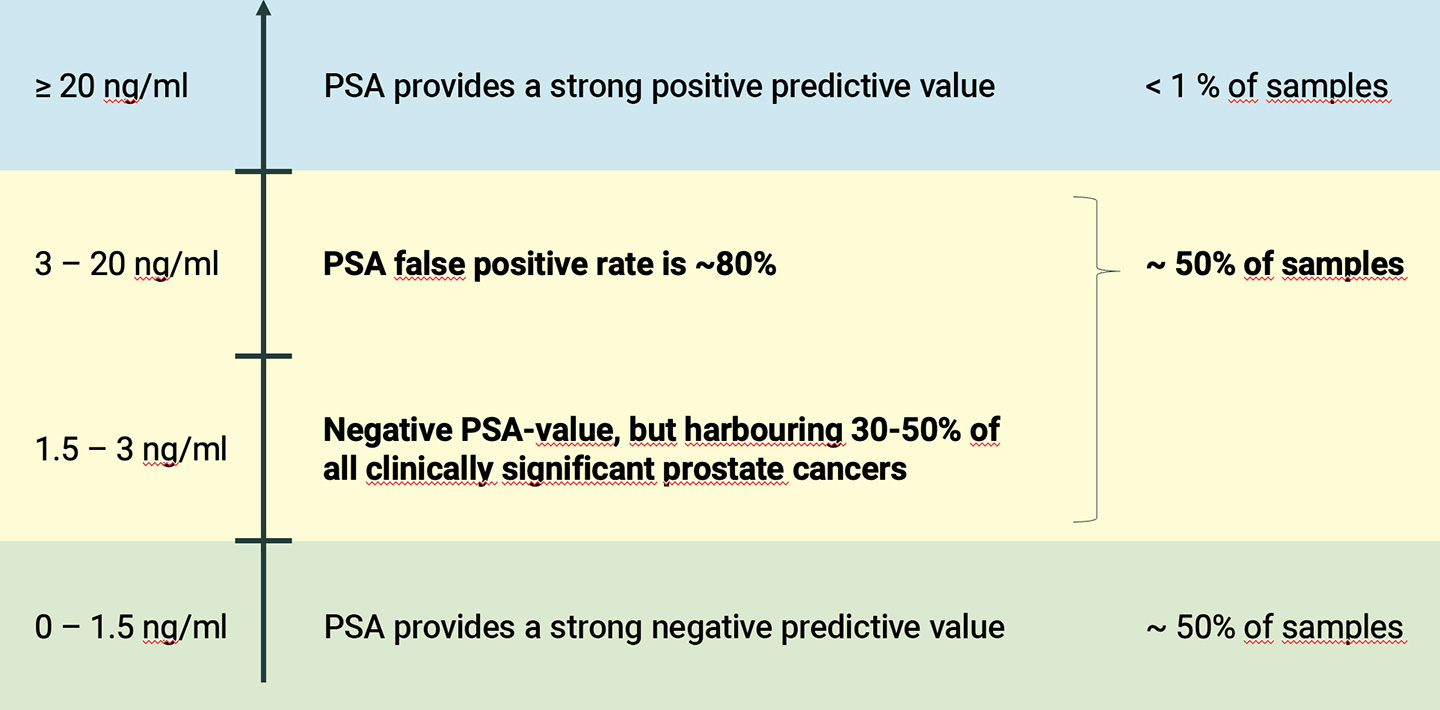
Prostate cancer has officially become the most prevalent cancer in the UK (January 2026), with more than 64,000 men diagnosed in 2022, a 21% increase in diagnoses from 2021. A national prostate cancer screening programme in the UK is under review – but whilst screening cannot alter the incidence of cancer, identifying disease and treating it early does significantly increase chances of survival. Survival rates for men with Stage 1 and Stage 2 prostate cancer are now close to 100%. Stockholm3 is a validated blood test that combines genetic markers, proteins and clinical data in an algorithm to predict risk of clinically significant prostate cancers in men aged 45-74 years with a PSA level greater than 1.5 ng/ml for whom no previous diagnosis of prostate cancer, or action has been made. This is both suitable and useful as a screening test in both primary or secondary care, it performs equally across diverse ethnicities and data confirms reduced referral rates for both imaging and prostate biopsy. A 4-Question Clinical Data form accompanying the 2 x EDTA tubes for the STK3 test is required. The form includes:
Please complete and send a completed 4-Question Form with each STK3 request.
Please contact stockholm3@tdlpathology.com for information and details about this test.
This landmark study with nine-year follow-up, published in European Urology, demonstrates that Stockholm3 can detect very aggressive prostate cancers among men with PSA levels in the 1.5 – 3 ng/ml range. Approximately 20-30% of men aged 50-75 years have a PSA between 1.5 – 3 ng/ml. Results from Stockholm3 testing identified men who would normally be missed by commonly used PSA thresholds only. Conversely men with elevated PSA, but low Stockholm3 scores, had low recurrence rates, highlighting the potential of this test to reduce unnecessary biopsies and overdiagnosis of indolent disease.
Month of March is Endometriosis Awareness Month Observed globally in March each year, Endometriosis Awareness Month is dedicated to the recognition of endometriosis, prompting earlier diagnosis, and improving access to appropriate care for a conditions that affects an estimated 200 million women across cultures and healthcare systems. Results from the recently published ENDOmiRNA study suggest the noninvasive Endotest could replace diagnostic laparoscopy for the diagnosis of endometriosis (sensitivity 97.3%, specificity 94.1% supporting the diagnostic performance). New England Journal of Medicine: (https://evidence.nejm.org/doi/pdf/10.1056/EVIDoa2400195). National Institute for Health and Care Excelence (NICE) (March 2026) has set out a dedicated fertility section for endometriosis and addresses the issue of delays in diagnosis. It sets out a clearer treatment pathway, with recommendation to take account of individual factors such as age, duration of infertility, ovarian reserve, symptom burden and any male factor infertility.
Please contact Endotest@tdlpathology.com for information and details about this test.
TDL Andrology: Comprehensive Semen Analysis (SPER) and Semen Culture (SPCU) Sperm counts have declined by 50% in Western countries over the last 50 years. Declining birth rates result from a complex interplay of social, economic, clinical, biological and environmental factors with male fertility playing a key role. It is recognised that patients are using social media for non-confrontational search/share content relating to male sexual health, testosterone optimisation, erectile dysfunction, male infertility and quality of sperm, but this approach for information has critical pitfalls. These include misinformation and a growing disconnect between what a man believes he needs and what evidence based medicine prescribes. Misconception and misinformation can distort patient expectations and decision making. Associated fertility problems can have a considerable impact on the health and wellbeing of all those affected by it. Infertility affects around 1 in 6 people. Many do not require treatments such as IVF but they may need referrals for specialist services at an early stage and the speed for specialist referral is therefore important. Men are just as likely to experience difficulty with their fertility as women and in half of heterosexual couples who have difficulty conceiving, the cause of infertility is sperm-related. The earlier the diagnosis of sperm related infertility is recognised, the sooner specialist support or a referral to a fertility clinic can be made. If additional laboratory tests are required, these can be undertaken at the same time for patients attending for a semen analysis. Appointments to attend for a semen analysis can be made online at www.tdlpathology.com/andrologybooking or by calling 020 7025 7940. It is important to make an appointment for all semen samples but by exception semen samples for Sperm Culture for infection can be collected at home and brought into the laboratory within 24 hours of producing their sample.
For further information and details of Andrology Services, please contact: Wayne Vessey, Head of Andrology, 76 Wimpole Street, London W1G 9RT
Semen Culture The number of samples received by the laboratory for semen culture to identify presence of infection now exceeds the number of samples received for a comprehensive semen analysis. Results from a semen culture can determine if infection in the semen may be negatively impacting fertility. If a comprehensive semen analysis for fertility is being undertaken, a semen culture sample can also be collected at the same time or on its own. Male genital tract infections are difficult to detect as they are often asymptomatic in many cases and often remain undiagnosed unless the patient seeks treatment for specific symptoms. Genital tract fertility infections should receive attention as the infection may be linked to reduced sperm motility.
Discontinued Tests Laboratory tests may be discontinued at short notice for a variety of reasons such as changes with reagent manufacturers, analyser development, supply chain, suspension or regulatory review. Depending on the reason, tests may be discontinued by manufacturers for short or long term – or even permanently and sometimes TDL may have been given very little notice. Whilst every effort is made to look for a comparable alternative service this is not always possible and even where an alternative is available, the turnaround times, normal values and methodology may be different. Comment is given with the alternative results with these changes. Where there is no suitable alternative, the laboratory will notify as it may not be possible to store samples for the long term and it may be necessary to discard them or return them to the referrer. Discontinued tests are shown on the TDL website: www.tdlpathology.com/discontinued-tests/
If you have any queries or would like further information about any of the tests please contact Annette.Wilkinson@tdlpathology.com |
||||||||||||||||||||||||||||||||||||||||||||||||||||||||||||||||||||||||||||||||||||||||||||||||||||||
|
The Doctors Laboratory Tel: +44 (0)20 7307 7373 E-mail: tdl@tdlpathology.com The Doctors Laboratory Ltd. Registered office: The Halo Building, 1 Mabledon Place, London WC1H 9AX. |
||||||||||||||||||||||||||||||||||||||||||||||||||||||||||||||||||||||||||||||||||||||||||||||||||||||

-
Tests
-
Self-Collect kits
-
Specialties
-
Allergy
-
Andrology
-
Antibiotic assays
-
Biochemistry
-
Cervical screening
-
Cytology (Non-Gynaecological)
-
Drugs of abuse/Alcohol
-
Endocrinology
-
Genetics
-
Haematology
-
Histopathology
-
Immunology
-
In-vivo tests
-
Microbiology/Infection Sciences
-
Occupational health
-
Reproductive health
-
Sexual health
-
Therapeutic drug assays
-
Tumour markers
-
Virology
-
Vitamins, nutrition and lifestyle
-
-
Services
-
Patients
-
About us